3. Chain of Hashes
Each BRICSCOIN contributes to a growing cryptographic structure:
- Individual hashes are linked together
- Forming a continuous chain
- The entire system ultimately resolves into a single final hash
This final hash is:
- Publicly published on the official BRICS banking platform
- Used as a global integrity checkpoint
Whenever new coins are introduced:
- The chain is extended
- A new final hash is published
Copies of the blockchain are distributed across multiple participants, ensuring transparency and resilience.
4. How Verification Works
Verification is designed to be both simple for users and deeply robust when needed.
Lightweight User Model
End users do not need to store full datasets.
Instead, they store:
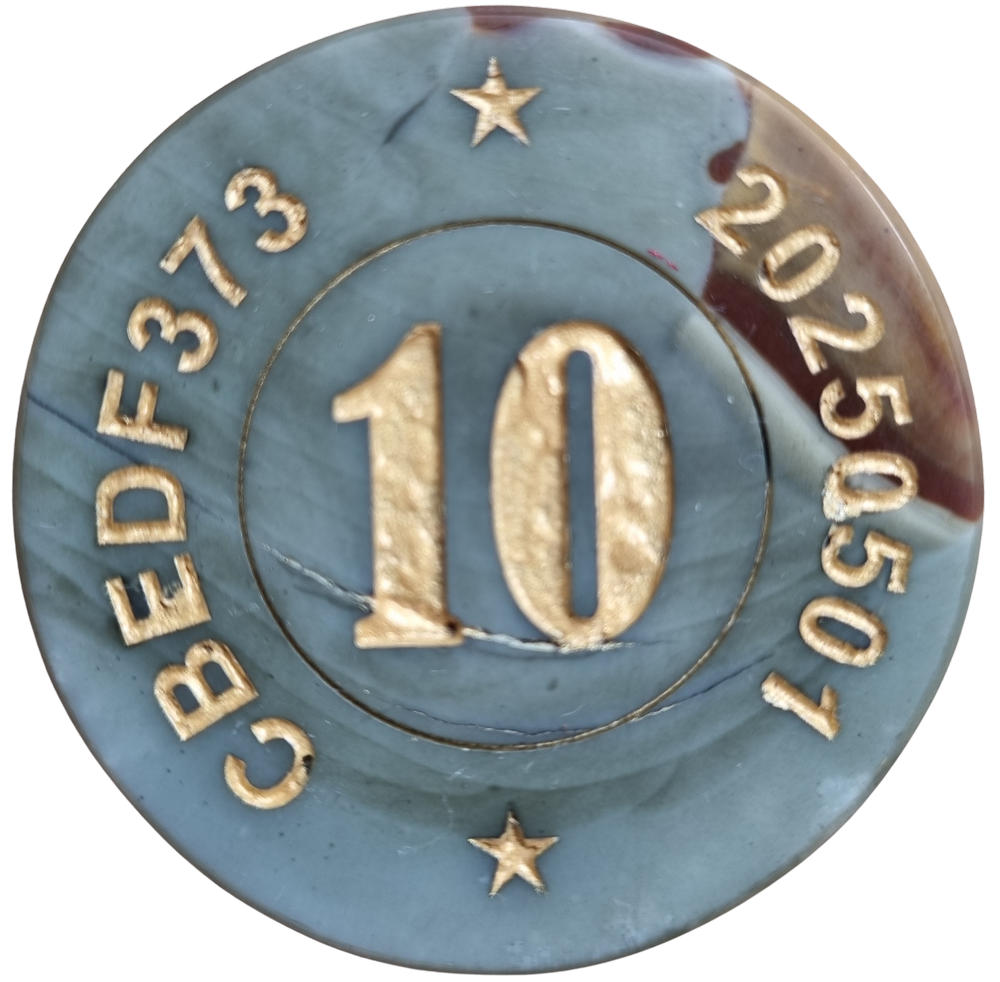
The hash engraved on the coin acts as a key.
Using this key, the user can:
- Retrieve the full verification dataset
- Access original images and records
Visual Verification
At the most basic level:
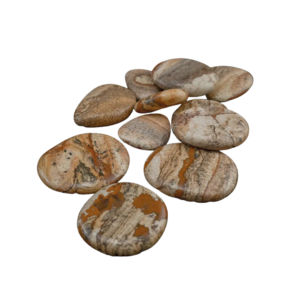
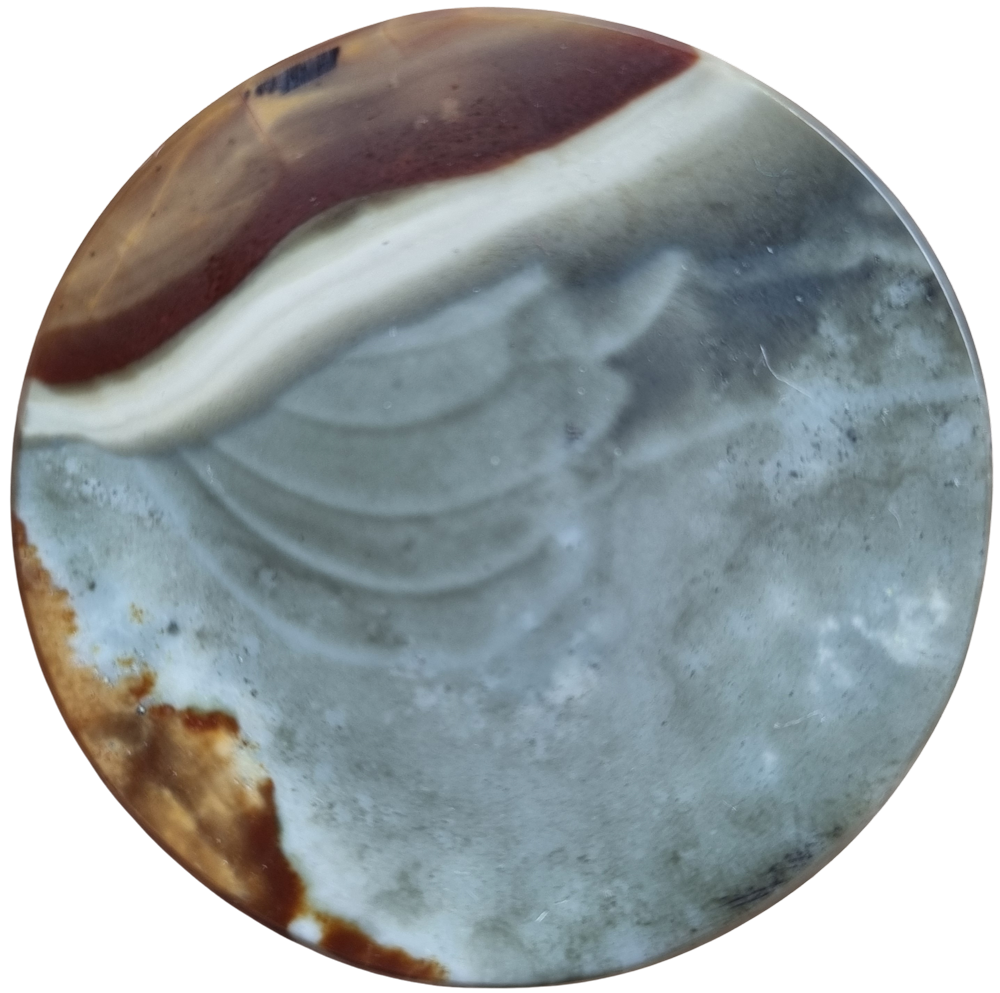
- The user compares the coin with stored images
This can be done:
- By naked eye
- With a smartphone camera
Because natural patterns are highly distinctive, visual matching is often sufficient.
AI-Assisted Verification
For higher assurance, advanced tools can be used:
- Pattern recognition algorithms
- AI-based image comparison
- Inclusion matching for gemstones
These systems can confirm authenticity with extremely high confidence.
Material Verification
Even the simplest physical tests can detect counterfeits:
- A kitchen knife will easily scratch:
- Plastic
- Paint
- Ceramic coatings
- But will not damage jasper
Scientific Verification
For institutional or high-value transactions:
Modern, accessible tools can be used:
- X-ray fluorescence (XRF) — verifies elemental composition
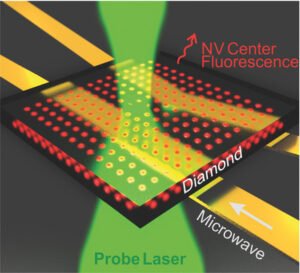
- Raman spectroscopy — confirms mineral structure
These methods are:
- Non-destructive
- Fast
- Increasingly low-cost and widely available
5. Defense Against Counterfeiting
A counterfeit would need to replicate:
- Exact natural stone pattern
- Exact internal gemstone structure
- Matching cryptographic hashes
- Correct position in blockchain
This is practically impossible.
Even high-quality visual copies:
- Fail material tests
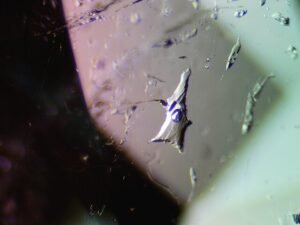
- Fail microscopic analysis
- Fail cryptographic verification
6. A Verifiable Physical-Digital Asset
BRICSCOIN transforms a simple object into:
- A physically unique artifact
- A digitally anchored identity
- A globally verifiable unit of value
Conclusion
Verification in BRICSCOIN is not based on trust in institutions alone.
It is based on:
- Nature’s randomness
- Scientific measurement
- Cryptographic certainty
From a simple visual check to advanced laboratory analysis, every layer reinforces the same truth:
Each BRICSCOIN is one of one